TidePool Press
•
October 29th, 2014
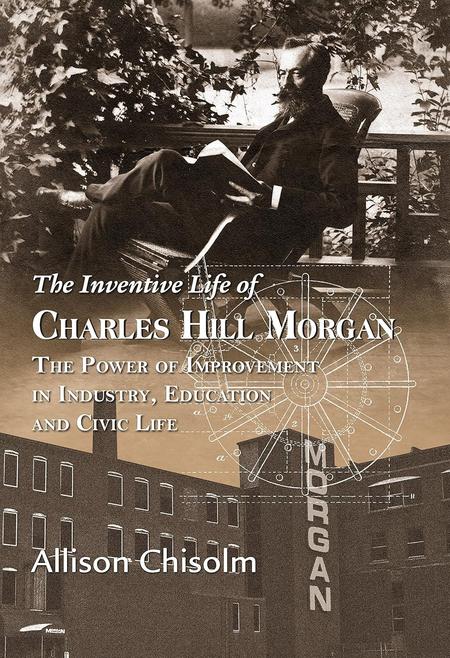
Biography: The Inventive Life of Charles Hill Morgan: The Power of Improvement in Industry, Education and Civic Life
When Charles Hill Morgan learned how to use specialized drafting tools in the 1840s, his professional-grade compass precisely centered measurements for foundations and steam engines. His mastery of these tools led to a future of vast new possibilities. The strength of his ideas and the success of his inventions took him on a path that led from Lancaster’s Factory Village in central Massachusetts to the courts of Europe. In the span of 80 years, Charles would go from living hand to mouth in Shrewsbury, Massachusetts to taking tea at Windsor Castle with the Queen of England. His life also reflected a strong moral compass, centered around church, family and service to others while running a Philadelphia paper bag business, overseeing the world’s largest producer of barbed wire, and then founding his own steel rolling mill company in Worcester, Massachusetts. Charles Morgan’s life journey serves to personalize the early development and subsequent successes of the American industrial revolution—a time in history when the power of ideas coupled with mechanical ability fueled those with a strong desire to find new solutions to old problems. His struggles, first to gain the technical knowledge and ability, and then to apply them in a commercial setting with only limited capital, echo the experiences of generations of American innovators. Armed with patents, and ultimately, a solid business built on his reputation for quality and integrity, the life of Charles Hill Morgan demonstrates a 19th century model of entrepreneurial success in the face of daunting odds, in a time when technological advances first provided a competitive advantage over longstanding methods and practices.